Overview:
Due diligence is a process that helps businesses evaluate and assess the risks and opportunities associated with a potential transaction or investment. It involves a detailed examination of a company’s financial and legal records, as well as its operations, management, and reputation.
Conducting business due diligence is a common step before a company’s purchase or investment by a potential buyer. The seller is obliged to furnish all necessary documentation and details for the due diligence. This process enables the buyer to make a well-informed decision and reduce potential risks in the transaction. A confidentiality agreement is typically signed before commencing due diligence, as it involves sharing sensitive financial, operational, and legal information with the buyer.
Why Conduct Due Diligence:
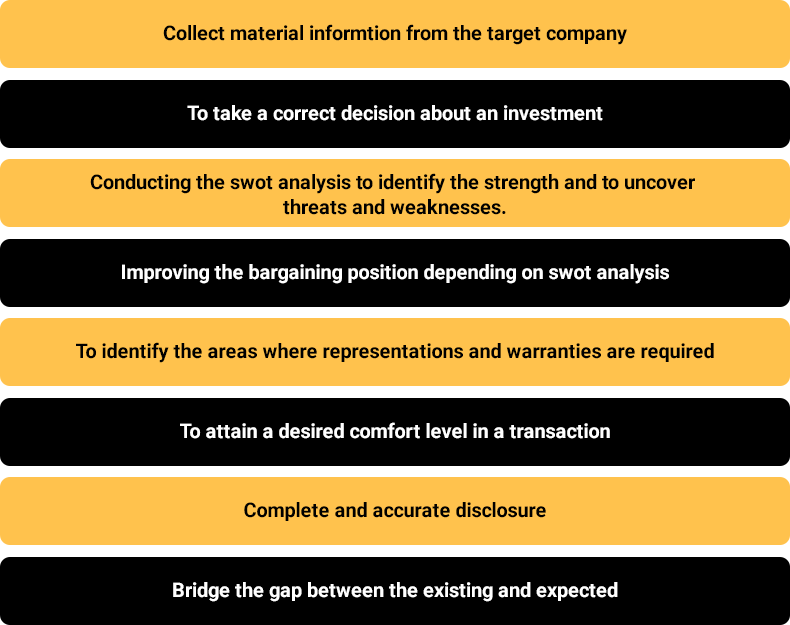
Conducting due diligence can provide several benefits, including:
- Identifying potential risks and liabilities associated with the transaction.
- Providing a clear picture of the company’s financial and operational health.
- Ensuring that the transaction is legally compliant and does not violate any laws or regulations.
- Assessing the company’s management team and evaluating its ability to execute the transaction successfully.
- Providing insights into the market and competitive landscape.
- Establishing a baseline for future evaluations of the company.
Essential documents required
For due diligence involving a private limited or limited company, the essential documents and information typically include:
- Memorandum of Association
- Articles of Association
- Certificate of Incorporation
- Shareholding Pattern
- Financial Statements
- Income Tax Returns
- Bank Statements
- Tax Registration Certificates
- Tax Payment Receipts
- Statutory Registers
- Property Documents
- Intellectual Property Registration or Application Documents
- Utility Bills
- Employee Records
- Operational Records
This list ensures a comprehensive review of the company’s legal, financial, and operational status.
Review and documents
The initial phase of a company’s due diligence often begins with the Ministry of Corporate Affairs (MCA). The MCA’s website publicly lists a company’s master data. Additionally, for a nominal fee, anyone can access all the documents submitted to the Registrar of Companies. The first step usually involves confirming the information available on the MCA website. The collected data and documents typically include:
- Company Information
- Date of Incorporation
- Authorized Capital
- Paid-up Capital
- Date of Last Annual General Meeting
- Date of Last Balance Sheet
- Status of the Company
- Director Information
- Directors of the Company
- Date of Appointment of Directors
- Charges Registered
- Details of Secured Lenders of the Company
- Quantum of Secured Loans
- Documents
- Certificate of Incorporation
- Memorandum of Association
- Articles of Association
Beyond these, the company’s financial details and other MCA filings related to different company aspects are downloadable for review. Analyzing the MCA documents offers a comprehensive insight into the company for the due diligence investigator.
Articles of association
Examining the articles of association is crucial in due diligence to understand the various equity share classes and their respective voting rights. These articles may impose restrictions on share transfers within the company. Therefore, it’s essential to review the articles to comprehend the share transfer procedures meticulously.
Statutory review of the company
As mandated by the Companies Act, 2013, private limited companies must keep statutory registers related to share allotment, transfers, board meetings, and directorship. Reviewing these registers is essential to verify and confirm details about the company’s directors and shareholders.
The Companies Act, 2013 mandates that all companies keep a detailed book of accounts. Auditing and cross-checking this against the company’s financial statements is essential. Financial due diligence includes:
- Verification of bank statements
- Assessment and valuation of all assets and liabilities
- Examination of cash flow details
- Cross-verification of all financial statements with transactional records
Differences between Due Diligence and Statutory Audit
In India, companies statutorily required to get their accounts audited by an unconventional Chartered Accountant. In some cases, companies needed to carry out an internal audit relating to their method. Due diligence is quite distinct from statutory audits. The difference between Due Diligence and Statutory Audit is given below:-
| S.No | Statutory Audit | Due Diligence |
| 1. | Limited to Financial Analysis | It not only includes the financial analysis but also includes Business plan, sustainability of business, future aspects, corporate and management prospects, legal issues, etc. |
| 2. | Based on Historical Data | Covers future growth prospects in addition to the historical data. |
| 3. | Statutory Audit is Mandatory. | Due Diligence is mandatory based on the transaction. |
| 4. | Provides Positive Assurance | Negative Assurance |
| 5. | Post-Mortem Analysis | Required for Future Decisions |
| 6. | Statutory Audit is always Uniform | Due Diligence varies according to the nature of transaction |
| 7. | The audit is recurring event | Occasional Event |
Review of taxation in the company
In due diligence, it’s imperative to scrutinize a company’s tax matters to prevent unexpected future tax liabilities. Essential tax-related checks include:
- Filing of income tax returns
- Payment of income tax
- Company’s income tax liability computation
- Filing of ESI/PF returns
- ESI/PF contributions
- Calculation of ESI/PF payments
- Filing of Service Tax/VAT returns
- Service Tax/VAT payments
- Methodology for Service Tax/VAT payment computation
- TDS return filings
- TDS payments
- TDS computation process
Review of legal in business
During due diligence, a thorough legal review by a qualified attorney is essential to identify any outstanding legal matters or litigation involving the company. Additionally, the legal due diligence should cover:
- Examination of all real estate holdings of the company
- Secured Creditor’s clearance for the company’s transfer
- Scrutiny of any legal documents and court records
Business operations review
A detailed grasp of the company’s business model, operations, and functional data is vital in due diligence. An exhaustive operational review should encompass on-site evaluations and staff discussions. The operational review should document:
- Business Model
- Customer Base
- Workforce Size
- Production Data
- Supplier Details
- Equipment Details
- Utility Services
Moreover, other operational elements specific to the company’s industry and model should also be meticulously examined and recorded.
Procedure:
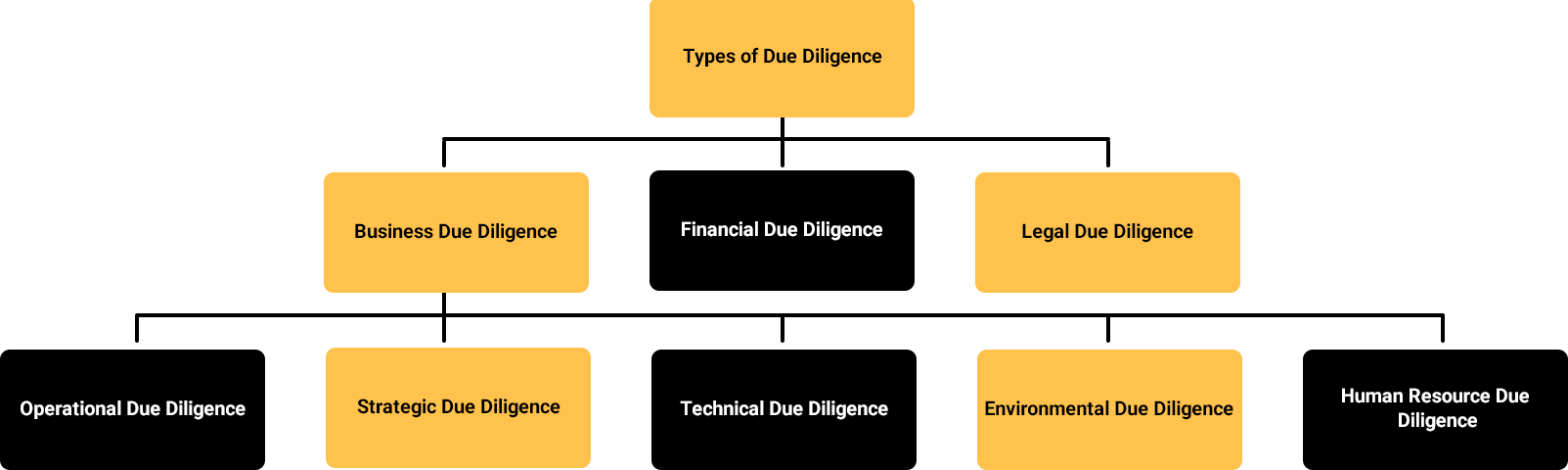
The due diligence process typically involves the following steps:
- Planning and scoping: Define the scope of the due diligence process, including the areas to be evaluated, the time frame for the evaluation, and the team responsible for conducting the evaluation.
- Information gathering: Gather all relevant information, including financial statements, contracts, leases, legal documents, and other important records.
- Analysis: Conduct a thorough analysis of the information gathered, looking for any red flags or areas of concern.
- Report preparation: Compile the results of the analysis into a comprehensive report, outlining the findings and making recommendations for next steps.

We at Corporate Raasta Consulting is here for you. Helping you with company’s due diligence. Connect with us now.
-
What is the purpose of conducting due diligence on a company?
Due diligence is performed to assess the viability and risks associated with a business sale, investment, or loan funding. It provides a detailed insight into the company’s financial, legal, and operational health.
-
Which documents are essential for company due diligence?
Key documents include the Memorandum of Association, Articles of Association, Certificate of Incorporation, Financial Statements, Tax Returns, Bank Statements, and various statutory registers.
-
Why is the review of MCA documents important in due diligence?
Reviewing documents from the Ministry of Corporate Affairs (MCA) provides a foundational understanding of the company’s legal standing, financial health, and operational status.
-
What should be examined in the Articles of Association during due diligence?
The Articles of Association should be reviewed for information on share classes, voting rights, and procedures for share transfer restrictions.
-
What is the significance of reviewing statutory registers?
Statutory registers offer validated information on share allotments, transfers, board meetings, and directorship, which are crucial for understanding the company’s governance.
-
What taxation aspects are checked during due diligence?
Taxation review includes verifying tax returns, payments, and calculations for income tax, ESI/PF, Service Tax/VAT, and TDS to ensure compliance and identify potential liabilities.
-
What legal aspects are reviewed during due diligence?
A legal audit ascertains pending legal actions, real estate property legality, and secured creditors’ consent for company transfer.
-
How are the books of accounts and financial statements reviewed?
The book of accounts should be audited and verified against the company’s financial statements to ensure accuracy in reporting assets, liabilities, cash flow, and transactions.